2025年12月7日
Aurora Tips
The Science Behind the Northern Lights
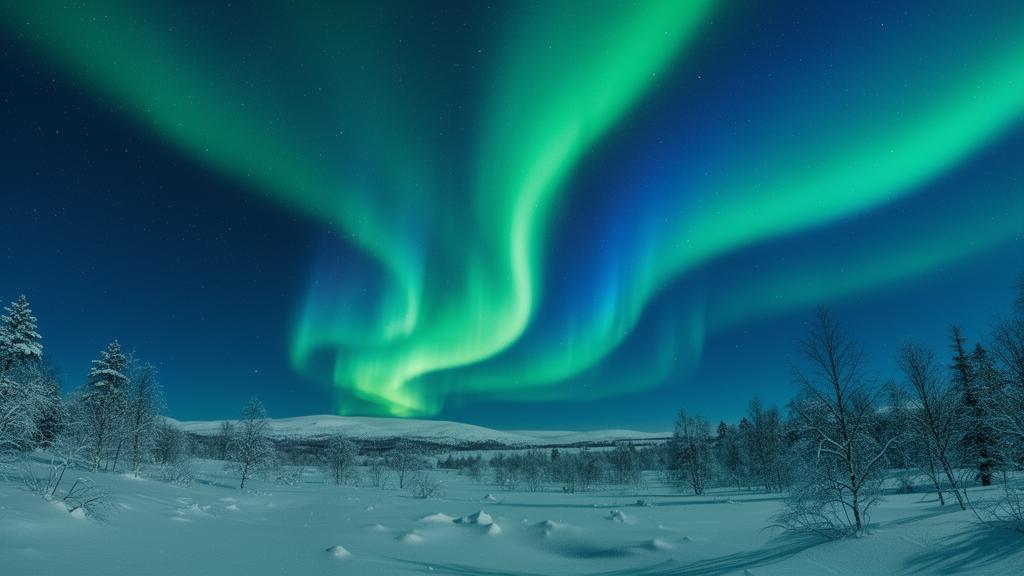
Discover the fascinating science that creates the magical aurora borealis dancing across the Arctic sky.
## The Magic Explained: Aurora Borealis Science
The Northern Lights are one of nature's most spectacular phenomena. Here's the science behind the magic.
### How Auroras Form
1. **Solar Wind**: The sun releases charged particles into space
2. **Magnetic Field**: Earth's magnetosphere captures these particles
3. **Atmospheric Collision**: Particles collide with oxygen and nitrogen
4. **Light Emission**: Energy is released as colorful light
### Aurora Colors
- **Green**: Oxygen at 100-300km altitude (most common)
- **Red**: Oxygen above 300km
- **Blue/Purple**: Nitrogen
- **Pink**: Mix of colors at lower altitudes
### Aurora Shapes
- **Arcs**: Stable bands across the sky
- **Curtains**: Rippling vertical structures
- **Coronas**: Overhead explosions of light
- **Pulsating**: Rhythmic flickering patches
### Why Yellowknife?
Located at 62.5°N latitude, Yellowknife sits directly under the auroral oval, making it one of the world's premier aurora destinations.
### Fun Facts
- Auroras also occur on other planets
- They can produce sounds (rare crackling)
- Indigenous peoples have rich aurora legends
Share this article
コメント (0)
コメントを残す
関連記事
2025/12/21
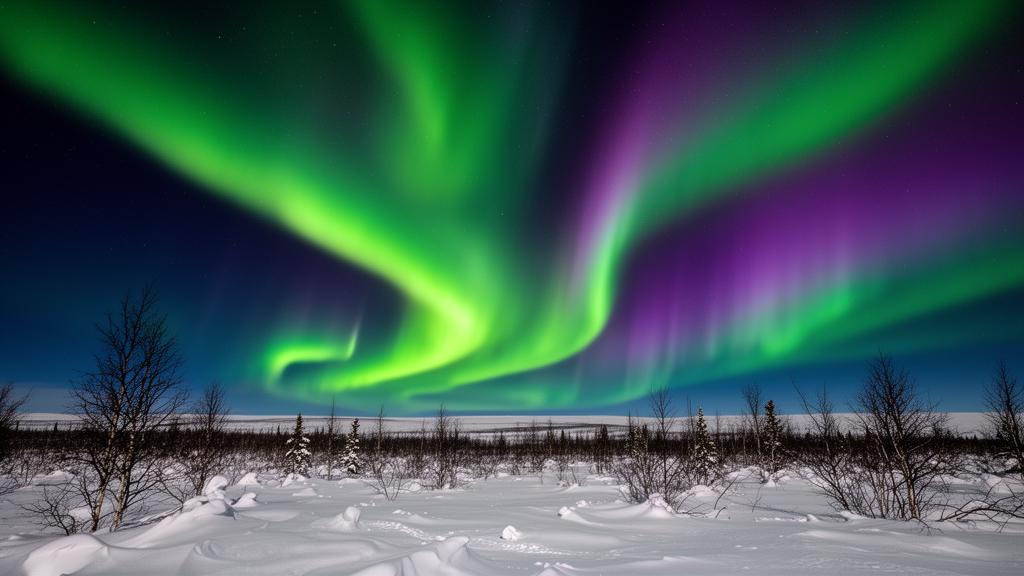
イエローナイフでオーロラを見るベストシーズン
カナダ随一のオーロラ観測地イエローナイフで、壮大なオーロラを観測するための最適な時期と条件をご紹介します。
続きを読む
2025/12/18
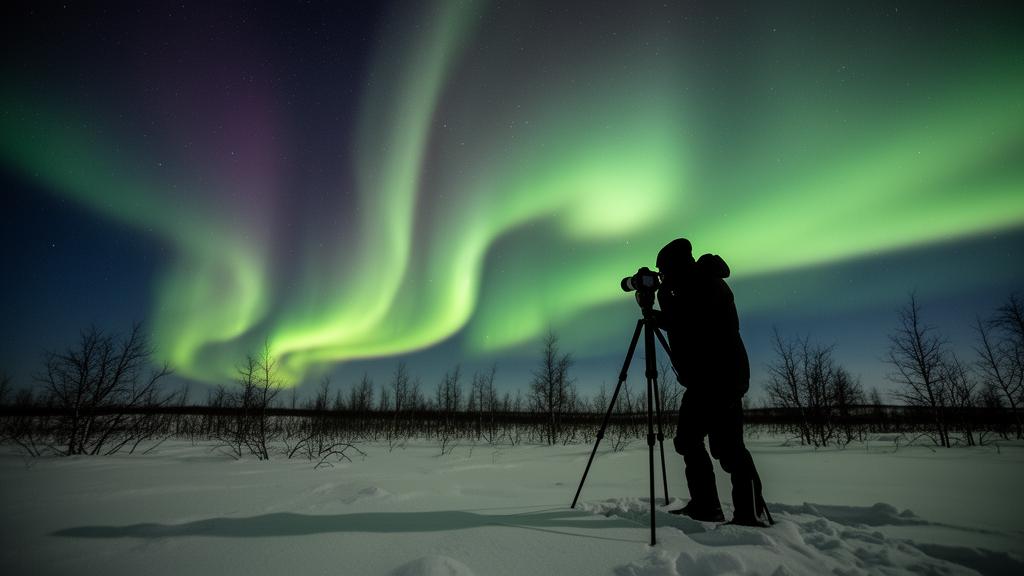
Essential Aurora Photography Tips for Beginners
Learn how to capture stunning Northern Lights photos with these essential camera settings and techniques for beginners.
続きを読む
2025/12/11
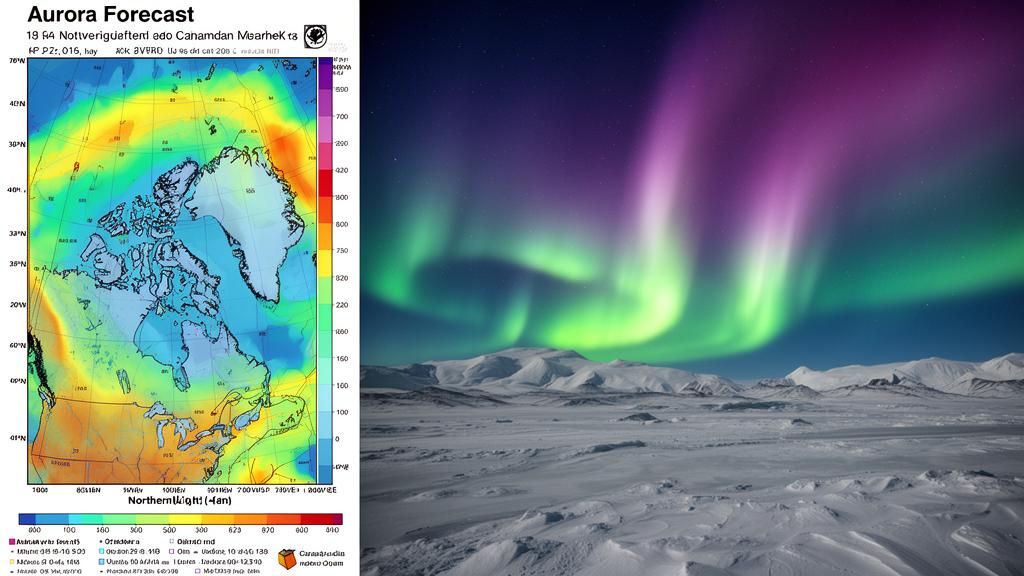
Understanding Aurora Forecast and KP Index
Learn how to read aurora forecasts and understand the KP index to maximize your chances of seeing the Northern Lights.
続きを読む